The Third Shot Drop
The third shot drop is the serving team’s third shot of the rally: a soft shot hit from the baseline on an arc that lands in the opponents’ kitchen. Because of the two-bounce rule, the returning team is usually at the net after the return while the serving team is still at the baseline. A low ball into the kitchen can’t be attacked, which gives the serving team time to move up to the kitchen line and turn a disadvantage into an even rally.
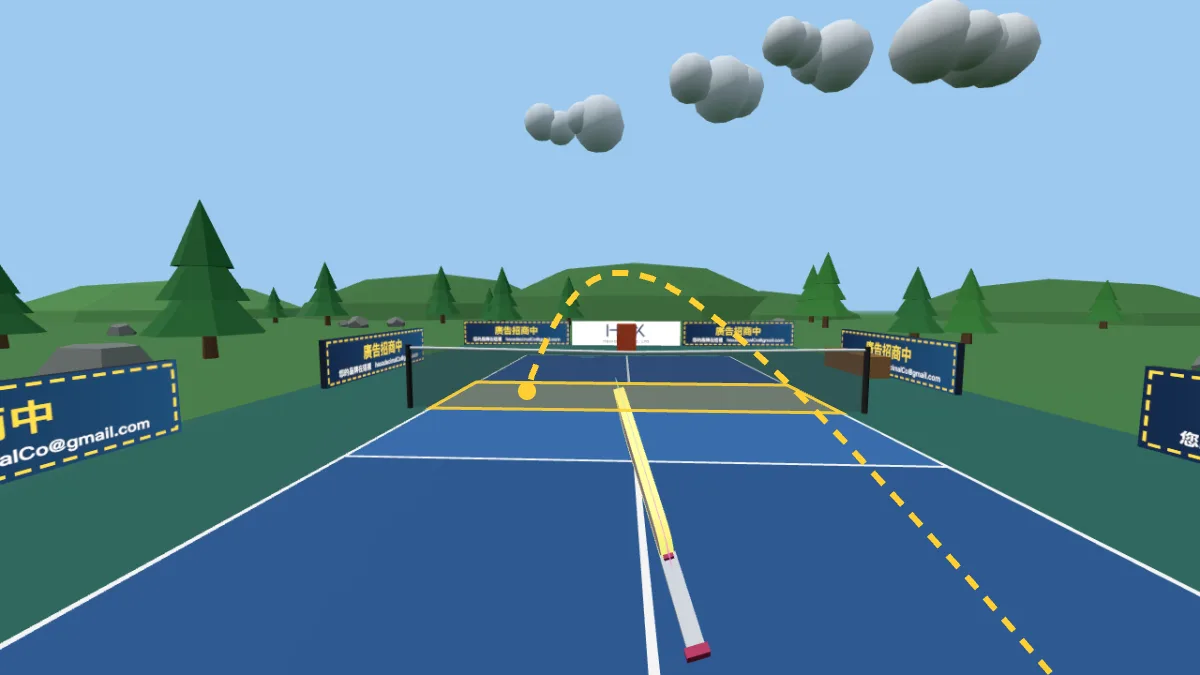 Arc peaks on your sideLands in their kitchenSoft shot from the baseline, then move up
Why the third shot matters
The serving team has to let the return bounce before hitting it (the two-bounce rule), so the returning team can move up to the net first while the serving team is stuck at the baseline. If the third shot is high and fast, the opponents at the net can easily volley it and attack. Drop a soft ball into the kitchen instead, and they can only hit up, which gives you the chance to move up to the net.
When to drive instead
- The return is deep and low: the drop is the safest choice.
- The return is short or high: drive it to put on pressure, then use a fifth shot drop to get to the net.
- The opponents aren’t at the net yet: a drive at their feet works just as well.
Common mistakes
- Hitting it too hard: the ball goes too fast and too flat, carries past the kitchen and becomes an easy high ball for your opponent.
- Not moving forward: the whole point of the drop is to get to the net. Move forward after you hit it, and split step when your opponent makes contact.
- Peaking on their side: the arc should peak on your side, so the ball drops after it crosses the net.
- Making contact too late: once the ball has dropped beside your body, it’s hard to control. Make contact in front of you.
Missed it? Reset in the transition zone
If your third shot doesn’t land in the kitchen and your opponents attack, block the ball softly back into their kitchen from the transition zone (between the baseline and the kitchen line). That’s called a reset. Then take another step forward, and keep going until you’re at the kitchen line.
The Third Shot Drop: steps
- Stay back after the serve: Because of the two-bounce rule, the return has to bounce, so wait behind the baseline.
- Prepare early and let it bounce: Read how deep the return is, move behind the ball and get your paddle ready early.
- Loose grip, contact out front: Keep a relaxed grip and make contact in front of your body, around waist height.
- Lift with your legs: Swing low to high, driven by your legs and shoulder, on an arc that peaks on your side of the net.
- Land it in their kitchen: Aim for the middle of their kitchen; better to land in the kitchen than to sail high past it.
- Move up to the net: Move forward after the shot, split step when your opponent makes contact, then keep moving up until you reach the kitchen line.
Watch and learn
Video: Coach Jess | Athena Pickleball (YouTube, loads when you play it)
FAQ
Do you always have to hit a third shot drop?
No. When the return is deep and low, the drop is the safest shot; when it’s short or high, driving it to put on pressure works well too, followed by a fifth shot drop to get to the net.
How high should a third shot drop be?
The arc should peak on your own side, a little above net height, so the ball drops after it crosses the net and lands in the opponents’ kitchen.
Why does my third shot drop keep going too long?
Loosen your grip, shorten your swing, lift with your legs instead of pushing forward with your arm, and aim for the middle of the kitchen rather than the kitchen line.
Why is it called the third shot?
The serve is the first shot of a rally and the return is the second, so the third shot is the serving team’s first chance to hit the ball after the serve.
Last updated: · Based on the official USA Pickleball rules