How to Dink in Pickleball
A dink is a soft shot hit from near the kitchen line with a small, steady motion that just clears the net and lands in the opponents’ kitchen. The keys to a good dink: stand behind the kitchen line, keep the paddle in front of you, push the ball forward with a pendulum motion driven by your shoulder, keep your wrist firm, and make the ball peak on your side so it drops after it crosses the net. The point of a dink isn’t to win the rally; it’s to force your opponent to hit up, then attack when they pop the ball up.
Practice dinking rallies in the game ›Why dink?
A ball that lands in the kitchen and stays low can’t be volleyed; your opponent has to let it bounce and lift it up, which makes it very hard to attack. When both sides dink at the net, it comes down to who loses patience first and hits the ball high, and whoever hits it high gets attacked.
Where to aim your dinks
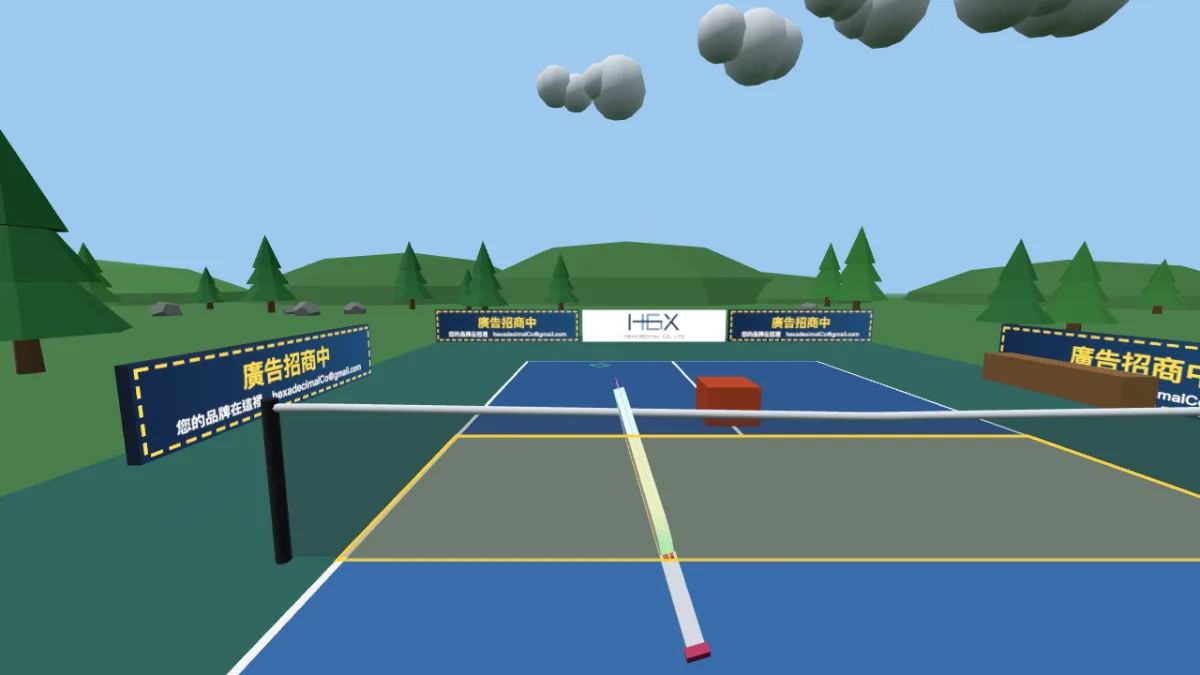 Dink target: their kitchenFrom your kitchen line, push it softly over
- Crosscourt dinks are safer: the ball travels farther, giving you more margin for error, so they’re the most common choice.
- Aim at your opponent’s feet or backhand to make the ball harder to handle.
- Land it in the middle-to-back of the kitchen, near the kitchen line; that’s less likely to go into the net than a dink tight to the net.
5 common mistakes
- Hitting it too high: if the ball is still rising after it crosses the net, your opponent can attack it. The peak should be on your side.
- Flicking your wrist: once the wrist moves, power and direction get inconsistent. Keep the wrist firm and move from the shoulder.
- Standing too far back: too far from the kitchen line, the ball has to travel farther, which makes it harder to control and leaves your feet open to attack.
- Swinging too big: a dink is a push, not a swing; keep the backswing and follow-through short.
- Rushing to win the point: attacking a low ball often ends in the net or gives the other side a counterattack. Be patient and wait for a high ball to attack.
How to Dink in Pickleball: steps
- Get to the kitchen line: Toes close to the kitchen line but not on it, feet shoulder-width apart, knees slightly bent, paddle out in front.
- Let the ball bounce: Dinks are usually low balls played after the bounce. Read the bounce and move to the side of the ball.
- Get low: Lower your body by bending your knees, not your waist, so the paddle can push forward from under the ball.
- Move from the shoulder, keep the wrist firm: Push the arm forward from the shoulder like a pendulum, with a slightly open paddle face and a steady wrist.
- Send it into their kitchen: Make the ball peak on your side so it drops after it crosses the net and lands in the opponents’ kitchen.
- Get back to ready position: Bring the paddle back in front of you right away for the next ball; if they pop it up, get ready to attack.
Watch and learn
Video: PlayPickleball.com (YouTube, loads when you play it)
FAQ
Should I dink with my forehand or backhand?
You need both: use whichever side the ball comes to. Many players actually dink more with the backhand at the net, because the paddle face is already in front of the body and the stroke is steadier.
Can you volley a dink?
Yes, but you must be outside the kitchen (not touching the kitchen or the kitchen line). Volleying a dink in front of the kitchen line (an air dink) gives your opponent less time to get ready.
How long should I dink before attacking?
Wait until your opponent pops the ball up above the net, then attack. Attack a ball below net height and it often ends up in the net or floats up and gives the other side a chance.
Why do my dinks keep going into the net?
Get lower and lift the ball with your knees rather than your arm, make it peak on your side of the net, and aim for the middle-to-back of the kitchen instead of right next to the net.
Last updated: · Based on the official USA Pickleball rules